Why princeton, NJ, is one of the most underserved towns for window film
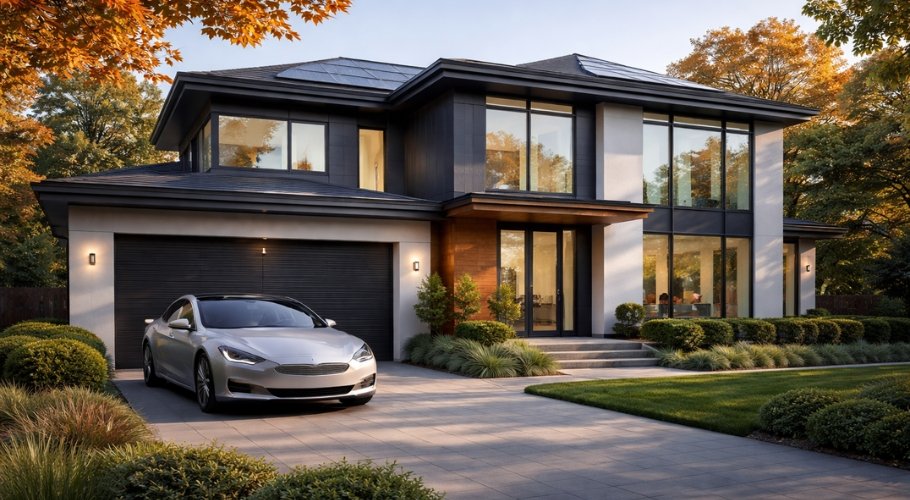
Princeton is a town that takes quality seriously. The architecture is considered. The interiors are often exceptional. The energy efficiency conversation is well-advanced compared to most New Jersey communities — solar panels on rooftops in the Western Section, EV chargers in driveways, well-insulated new construction along the edges of town. Princeton residents and business owners, on the whole, pay attention to how their properties perform.
And yet, window film — one of the most cost-effective, least invasive, and most immediate glass performance upgrades available — remains dramatically underutilized across Princeton’s residential and commercial stock.
This isn’t a critique. It’s an observation about a genuine market gap. And understanding why it exists is the first step to understanding what Princeton properties are quietly losing every year as a result.
Why Princeton Is Underserved — and Why It Matters More Here Than Most Places
The window film industry in New Jersey has historically concentrated its marketing and installation activity around two use cases: automotive tinting and large commercial buildings. Residential and small commercial window film — the segment most relevant to Princeton’s mix of historic homes, faculty residences, downtown offices, and Route 1 professional spaces — has received far less attention from installers and far less awareness from property owners.
The result is that a meaningful percentage of Princeton homeowners and business operators have never had a substantive conversation about window film. They’ve lived with the afternoon glare in the home office, the faded hardwood near the south-facing windows, the guest room that runs five degrees hotter than the rest of the house in July, and the conference room where the afternoon sun makes video calls difficult — and treated these as fixed features of their spaces rather than solvable problems.
This matters more in Princeton than in most New Jersey towns for a few specific reasons.
Princeton’s housing stock is older and architecturally significant. A substantial portion of Princeton’s residential properties — particularly in the Western Section, the historic Borough core, and along the streets adjacent to the Princeton University campus — are pre-war or mid-century construction with original or period-replacement single-pane windows. These windows offer almost no thermal or UV management whatsoever. Window film on single-pane glass performs exceptionally well and carries none of the thermal stress concerns associated with double-pane units. These properties are ideal candidates — and most have never been assessed.
Princeton’s interiors are worth protecting. The combination of original hardwood floors, period millwork, quality furniture, and artwork that characterizes many Princeton homes makes the UV damage equation particularly consequential. Ultraviolet radiation is responsible for approximately 40% of interior fading and material degradation. A Princeton home with irreplaceable original flooring, antique furniture, or significant artwork near south- or west-facing windows is losing interior value to UV exposure continuously — and film would stop that immediately.
Princeton’s professional and academic community works at glass. The density of home offices, research spaces, university-adjacent work environments, and professional practices in Princeton creates a concentrated population of people whose daily work is disrupted by glare. Screen work in glare conditions is not merely uncomfortable — research on visual ergonomics consistently links high-contrast glare to measurably reduced productivity, increased eye strain, and longer task completion times. The Princeton workforce that deals with this daily is, in aggregate, working less effectively than it would with properly managed glass.
What Princeton’s Climate Is Doing to Unprotected Glass Year-Round
Princeton sits in Mercer County and experiences a genuine four-season mid-Atlantic climate. Each season creates a different glass performance challenge — and the cumulative annual impact on unprotected windows is more significant than most property owners account for.
Summer brings the most acute problem. July average highs reach 86°F to 88°F, with heat index values regularly pushing past 95°F. UV index readings between June and August consistently reach 7 to 9 — high to very high. Standard glass transmits up to 75% of total solar energy, meaning south- and west-facing rooms in Princeton homes and offices are absorbing the majority of that solar load directly into the interior. The HVAC system fights this load every afternoon for five months. The UV component works invisibly on floors, fabrics, and finishes regardless of whether the heat is noticeable.
Autumn and winter bring Princeton’s second glass performance challenge. With January average lows in the mid-20s°F and extended periods of sub-freezing overnight temperatures, thermal performance of glass becomes a heating-season concern. Single-pane windows — common in Princeton’s older housing stock — lose heat at a rate dramatically higher than double-pane units. Low-emissivity window film applied to single-pane glass can reduce winter heat loss significantly by reflecting interior infrared heat back into the room rather than allowing it to escape through the glass. For Princeton homeowners spending significant money on heating through the winter, this is a tangible and recurring saving.
Spring brings Princeton’s glare problem into focus. As the sun angle increases and daylight hours extend, low-angle morning sun enters east-facing windows at increasingly harsh angles from March onward. Princeton’s mix of home offices, residential workspaces, and academic environments makes spring glare a specific productivity problem that compounds through the season.
The full-year picture reveals that unprotected glass in Princeton is an energy and comfort liability across all four seasons — not just a summer cooling concern.
The Gap Between What Princeton Residents Know and What’s Available
Here is the specific market gap that makes Princeton underserved rather than simply untapped.
Most Princeton homeowners who have thought about window film associate it with one of two things: dark automotive tint or the mirrored commercial glass on office buildings. Neither of these describes what modern residential and commercial window film actually looks like or does.
Premium spectrally selective and nano-ceramic films installed in a Princeton home are, in most cases, visually indistinguishable from untreated glass once installed. They don’t darken the room. They don’t create a reflective exterior appearance. They don’t change how the home looks from Nassau Street or from the neighbor’s driveway. What they change is invisible — the thermal performance of the glass, the UV transmission, and the glare characteristics of the light entering the room.
This perception gap — between what people think window film is and what it actually is in 2026 — is the core reason Princeton remains underserved. The product that most Princeton homeowners would find genuinely useful bears almost no resemblance to the product they imagine when they hear the words “window film” or “window tint.”
What Princeton Properties Are Losing Without It
The cumulative annual cost of unprotected glass across a Princeton property is worth making explicit.
Energy costs accumulate continuously. Research from the International Window Film Association indicates that solar control films reduce residential cooling costs by 5% to 30% depending on orientation and film specification. For a Princeton household spending $2,500 or more annually on cooling — typical for a home with central air running from May through September — even a conservative 10% reduction represents $250 per year, sustained across the film’s 15-to-20-year lifespan.
Interior asset degradation happens invisibly but compounds over time. Wood floors, upholstery, window treatments, and artwork exposed to unfiltered UV radiation show measurable degradation within two to five years of sustained sun exposure. For Princeton homes with original hardwood floors or quality furnishings, the replacement cost of UV-damaged materials over a 15-year period often exceeds the entire cost of window film installation several times over.
Productivity and comfort loss is harder to quantify but real. A Princeton professional who avoids their south-facing home office between 1 PM and 4 PM daily from April through October is losing approximately 180 hours of prime working time per year to an unmanaged glare problem. That’s a significant productivity cost with a straightforward solution.
Property presentation is a Princeton-specific consideration. In a real estate market where interior condition and light quality are meaningful value factors, rooms that are unusable or uncomfortable during significant portions of the day represent a presentation liability — one that film can simply remove.
The Specific Film Types Most Relevant to Princeton’s Gap
For Princeton’s older single-pane housing stock, the combination of Low-E insulating film for winter performance and spectrally selective solar control film for summer heat and glare management addresses both seasonal challenges in a single product or two-film strategy. These properties benefit most dramatically from film because their baseline glass performance is the lowest.
For Princeton’s double-pane residential properties, nano-ceramic solar control film is the highest-performing compatible option — strong TSER ratings, full UV blocking, no signal interference, neutral appearance, and compatibility with Low-E coated double-pane units when specified correctly.
For Princeton’s professional and academic offices, glare-control spectrally selective films on east- and west-facing glass transform daily working conditions without requiring any change to the building’s exterior appearance — relevant in Princeton’s design-conscious commercial environment.
For Princeton’s conference rooms, medical practices, and professional spaces, frosted and switchable smart glass films provide the privacy and confidentiality functionality that glass-walled spaces require — converting a liability into a functional asset.
Closing the Gap
The window film gap in Princeton is not permanent. It closes one property at a time, as homeowners and business operators learn what the product actually is — not the dark tint they imagined, but a precision glass upgrade that addresses real, specific, and measurable problems in their particular space.
Princeton’s combination of architectural quality, interior investment, climate demands, and professional work culture makes it one of the most compelling markets for premium window film in all of New Jersey. The gap between that potential and current adoption is simply a function of awareness — and awareness is exactly what closes gaps.
To understand specifically which film type addresses your Princeton property’s actual conditions — whether it’s a Victorian on a tree-lined street, a modern townhouse near Princeton Junction, or a professional office in the downtown core — speaking with a local window film specialist who understands Mercer County’s building stock and climate is the most direct way to move from the gap to the solution.