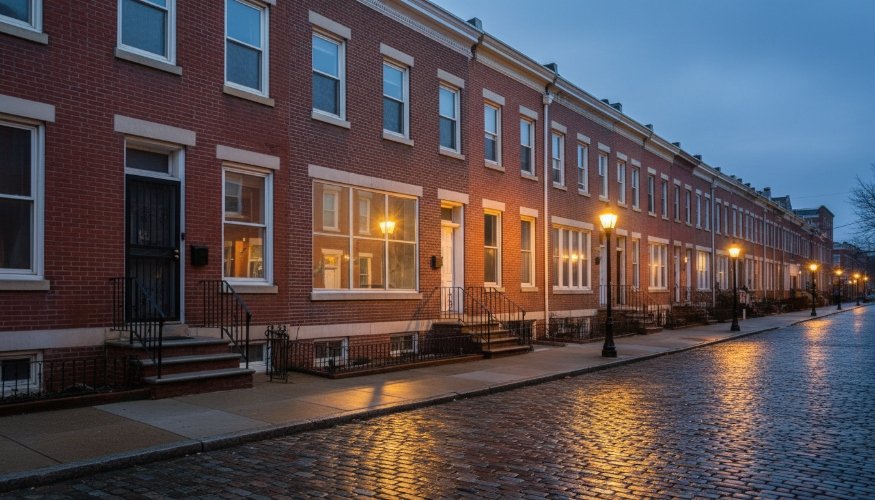
Forced entry and shattered windows: how Trenton homes can slow both down
Every Trenton homeowner who has upgraded their front door hardware has done something sensible. A reinforced strike plate, a quality deadbolt, a smart lock with activity logging — these are meaningful improvements. But there is a specific and uncomfortable irony built into how most home security upgrades work: the stronger the door, the more attractive the window beside it becomes.
Forced entry through glass is faster than most homeowners realize, quieter than any door breach, and requires no specialized tools. A standard residential window pane surrenders to a single sharp impact in under ten seconds. The glass clears the frame. The opening is accessible. The entire sequence from decision to entry is complete before most alarm systems have processed the event, let alone triggered an audible response.
Trenton’s property crime profile makes this more than a theoretical concern. Residential burglary rates in multiple Trenton neighborhoods — the West Ward, South Trenton, Chambersburg — have historically run well above New Jersey state averages. The combination of an urban property stock with significant concentrations of older single-pane windows and a persistent property crime environment creates a specific and addressable glass vulnerability that security window film is engineered to solve.
This is what changes when Trenton homeowners stop treating glass as a fixed vulnerability and start treating it as a manageable one.
Why Glass Remains the Fastest Entry Point
The security industry has done an effective job of marketing door hardware, camera systems, and alarm monitoring. It has done a comparatively poor job of addressing the physical properties of glass — which is why most Trenton homes are significantly better secured at the door than at the window.
Standard residential glass — whether single-pane or conventional double-pane — behaves the same way under sharp impact: it fractures and collapses. The physics are straightforward. Glass is strong under distributed load but brittle under point-force impact. A single strike from a common blunt object creates a fracture pattern that propagates rapidly across the pane, and once the glass fragments, they fall away from the frame almost immediately.
What this means practically is that the entry sequence through glass is not just fast — it is also remarkably silent compared to door-forced entry. Breaching a quality door frame requires sustained noise and effort. Breaking a standard residential window in a Trenton home requires a single impact that, depending on street noise and distance, may not be heard beyond the immediate vicinity.
Security window film addresses this by fundamentally altering how glass behaves after impact.
The film is a high-tensile polyester laminate bonded to the interior surface of the glass. It does not prevent the glass from fracturing under impact — no film product does. What it does is prevent the fractured glass from clearing the frame. When an impacted pane shatters, the film holds the broken fragments in a cohesive sheet. The glass is cracked — visibly, completely — but it remains in the frame, occupying the opening, continuing to present physical resistance to passage.
What this single change produces is resistance time — and resistance time is the most consequential variable in deterring the opportunistic forced entry that characterizes the vast majority of residential break-ins in Trenton.
Resistance Time: Why 60 Seconds Changes Everything
Behavioral research on residential burglary consistently identifies time as the primary risk variable in a perpetrator’s decision to attempt or abandon a forced entry. The majority of residential break-ins are opportunistic rather than pre-planned — the property is selected because it appears to offer fast, low-risk entry, not because it has been specifically targeted for its contents.
A standard residential window in Trenton offers exactly what opportunistic entry requires: a fast, silent, low-effort breach. Ten to fifteen seconds, no sustained noise, no visible struggle, no risk of being observed in the act of forcing entry.
Security window film at 8 mil thickness — the specification most appropriate for ground-floor residential applications — converts that ten-second event into a sustained, noisy, visible effort that typically takes sixty seconds or more to complete. The perpetrator is no longer making a single silent strike. They are striking repeatedly at glass that holds together, producing noise with each blow, remaining visibly present at the window, and investing time that increases their exposure to observation and response.
Research from the International Association of Certified Home Inspectors and multiple residential security studies indicates that forced entry attempts requiring more than sixty seconds are abandoned at dramatically higher rates than those completing in under thirty. The profile of a typical Trenton residential break-in attempt — opportunistic, noise-averse, exposure-averse — is precisely the profile that sixty-second resistance converts from completion to abandonment.
This is the mechanism by which security film works. Not by making glass impenetrable. By making it slow enough, noisy enough, and visible enough that the risk calculation for an opportunistic perpetrator changes from favorable to unfavorable.
Thickness, Specification, and What Trenton Homes Actually Need
Security film is not a single product. Thickness varies — and thickness determines performance in meaningful, specific ways.
4 mil security film is the entry threshold. It holds glass fragments after the first impact and blocks 99% or more of UV radiation. It is appropriate for secondary ground-floor windows in lower-risk positions — windows not adjacent to door hardware, windows in less-accessible locations, or upper-floor glass where direct ground-level access requires equipment. For Trenton properties where budget requires prioritization, 4 mil on secondary glass provides baseline protection while resources are directed toward higher-specification film on primary vulnerability points.
8 mil security film is the residential standard for primary vulnerability points. Ground-floor windows adjacent to door locks, rear windows accessible from alleys or yards, sidelights beside front and rear entry doors, and sliding glass patio doors all warrant 8 mil specification in a Trenton residential context. This thickness sustains resistance through multiple strikes — typically requiring sustained blunt-force effort over sixty seconds or more before the film’s holding strength is overcome. For the majority of Trenton single-family homes and two-family properties, 8 mil on primary ground-floor glass and 4 mil on secondary glass covers the residential threat profile comprehensively.
12 mil security film represents the high end of residential specification and approaches commercial-grade performance. It is appropriate for Trenton properties with identified elevated risk profiles — homes in higher-crime locations within the city, properties that have experienced previous break-in attempts, or homes with large floor-to-ceiling glass panels at ground level where a standard-height window’s resistance time is not sufficient. At 12 mil, sustained forced entry attempts with common tools require significantly extended effort before the film yields.
Anchored installation elevates any film specification by mechanically bonding the film to the window frame through structural silicone sealant applied at the glass edges. In standard installation, a determined perpetrator who has broken through the film’s holding strength can push the glass-and-film unit inward from the frame. Anchored installation prevents this by requiring the frame itself to be defeated in addition to the glass — a substantially more difficult and time-consuming undertaking. For the highest-risk entry points in Trenton properties, anchored 8 mil or 12 mil represents the most complete residential glass security solution currently available outside of glass replacement with laminated safety glass.
The Trenton Housing Stock and How It Maps to Film Specification
Trenton’s residential property landscape is not uniform, and the right security film approach differs meaningfully by property type.
Older single-family homes with original single-pane windows — the dominant glass type in established Trenton neighborhoods including the West Ward, Chambersburg, and Hiltonia — are the most straightforward security film application. Single-pane glass has no thermal stress compatibility concerns that affect film selection, and the baseline vulnerability of single-pane glass makes the protection benefit from film most acute. For these properties, 8 mil installation on all ground-floor windows is a practical and cost-effective complete treatment.
Two-family and three-family rental properties represent a significant portion of Trenton’s residential stock, and security film is particularly well-suited to the landlord’s security calculus. Film requires no tenant cooperation to function, no subscription cost to maintain, and no replacement after a non-breach event. It installs once and performs continuously under manufacturer warranty for 10 to 15 years. For Trenton landlords who have absorbed the repair cost of glass break-ins — replacement of a standard residential window runs $200 to $500 per incident, not including ancillary damage — a single film installation that prevents multiple such events pays for itself rapidly.
Newer construction with double-pane windows in Trenton’s developing neighborhoods and renovation corridors requires glass type verification before film selection. Double-pane insulated glass units require security film with specific solar absorption characteristics to avoid thermal stress within the sealed unit. This is not a barrier to installation — compatible security film products exist for double-pane applications — but it is a specification step that should be confirmed by a knowledgeable installer rather than assumed.
Ground-floor commercial glass on Trenton’s neighborhood business corridors — South Broad Street, Clinton Avenue, and the city’s retail strips — faces the same glass vulnerability in a commercial context. Large storefront plate glass panels, typically single-pane in older commercial buildings, are the primary target in smash-and-grab theft attempts. Security film at 8 mil or 12 mil holds storefront glass together after impact, converting a successful smash-and-grab breach into a sustained attack that attracts attention, consumes time, and typically results in abandonment before entry or significant theft is achieved.
The Solar and UV Benefit That Comes Included
Security film’s primary engineering purpose is impact resistance — but the polyester laminate material that provides that resistance also blocks 99% or more of ultraviolet radiation as a structural property, not an added feature.
For Trenton homes where original hardwood floors, period woodwork, or quality furnishings are exposed to south- or west-facing sun through ground-floor windows, this UV blocking stops the slow fading and degradation that has likely already begun. The security upgrade simultaneously becomes an interior preservation investment — a combination that many Trenton homeowners find genuinely useful once they understand it.
Select security film specifications also incorporate solar heat control properties — meaningful infrared heat rejection layered into the film structure alongside the impact resistance. For Trenton homes where south- or west-facing ground-floor rooms are uncomfortably warm during summer afternoons, a security-plus-solar film specification addresses thermal comfort and glass security in a single product and installation event.
A Practical Starting Point for Trenton Homeowners
Begin with a perimeter walk of your property. Identify every ground-floor glass opening — windows, door glass panels, sidelights, sliding doors. Note which of these are adjacent to door hardware, which are accessible from alleys or side yards, and which are most visible from the street.
The windows adjacent to door locks are your highest priority. These are the points where glass breach translates immediately into complete interior access without any additional entry effort. These should receive 8 mil film as a minimum, with anchored installation if budget permits.
Rear and side windows accessible from less-visible positions — alleys, side yards, back gardens — are the second priority. These are the locations where a forced entry attempt has the most time to complete without observation. Eight mil film here extends the resistance period into the range where detection and response become plausible.
Front windows that are highly visible from the street but not adjacent to door hardware represent a lower but still real vulnerability. Four mil or 8 mil depending on assessed risk level and available budget.
To develop a complete glass security specification appropriate for your specific Trenton property — its construction type, its neighborhood risk profile, and its existing glass configuration — speaking with a security window film specialist who understands Trenton’s residential security landscape is the most efficient path to a well-matched installation.
What Changes After Installation
The change that security film makes to a Trenton home is not visible from the street. The windows look the same. The glass is clear. There is no external signal that anything has changed.
What has changed is how the glass behaves under the one condition that defines its security relevance: forced impact. The entry path that was fastest, quietest, and most reliable is now slower, noisier, and less reliable. The risk calculation that favored opportunistic glass breach has shifted against it.
For a city where glass vulnerability has been real, persistent, and largely unaddressed across the residential stock, that shift is not a minor adjustment. It is a meaningful and durable change to how a property responds to the most common forced-entry scenario — installed once, performing continuously, requiring nothing from the homeowner after the fact.
That is what closes this particular security gap in Trenton. Not awareness of the risk — Trenton homeowners have had that for years. Awareness of the solution.