Bad installs and wrong products: how a Voorhees nj film expert saves you both
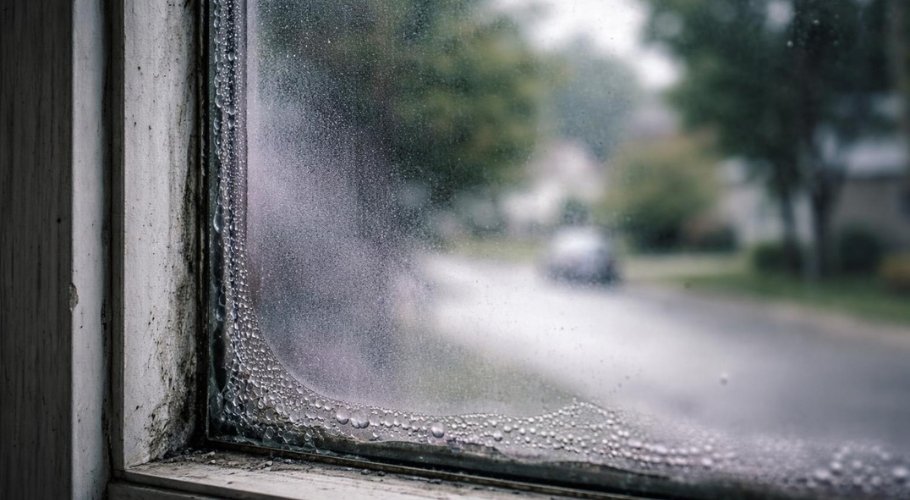
Window film failure is rarely dramatic. It doesn’t announce itself on installation day. It reveals itself slowly — a color shift you notice six months later, bubbles that appear in year two, a double-pane seal that fogs in year four, an energy bill that never dropped the way you expected. By the time the failure is visible, the opportunity to prevent it has long passed.
In Voorhees Township, the two most common sources of window film regret are not the product category — they are the product selection and the installation quality. Wrong film on the wrong glass, or right film installed by someone who didn’t know what they were doing. Both produce outcomes that look fine on the day and reveal their problems over time. Both are entirely preventable by a specialist who knows what they’re doing before the first piece of film is cut.
This is what an experienced Voorhees window film expert prevents — and how.
The Wrong Product Problem: What Gets Installed When Nobody Checks
Camden County’s residential market includes window film products across a wide performance and quality spectrum, and not all of them are being matched thoughtfully to the homes they’re installed in. The wrong product category happens for a consistent set of reasons.
Selling on price rather than performance. Entry-level dyed films are meaningfully less expensive to purchase than premium nano-ceramic films. The margin opportunity for an installer is better on the lower-cost product, and in a sales conversation where TSER ratings and film technology are not being discussed, the homeowner has no basis for distinguishing one from the other. A Voorhees homeowner who receives a quote for “premium solar film” without a specific product name, a documented TSER rating, and confirmation of glass compatibility may be purchasing a dyed film that will degrade noticeably within five to seven years — not the fifteen-to-twenty-year investment they believe they’re making.
Ignoring glass type. This is the product mismatch that creates the most severe and costly failures. Voorhees Township’s housing stock spans construction eras from the 1970s through present — older single-pane homes in established neighborhoods, mid-generation double-pane construction throughout the township’s suburban corridors, and newer double-pane Low-E glass in recent developments near Voorhees Town Center. Each glass configuration has specific film compatibility requirements. High-absorption dyed films on double-pane glass create thermal stress that progressively damages the sealed unit. Any solar control film on Low-E glass without compatibility verification creates the possibility of compounded thermal absorption that exceeds what the unit was designed to sustain. An installer who applies the same film to every glass type they encounter — which describes a meaningful portion of the lower-end installation market — is producing wrong-product installations on every property where the glass type wasn’t assessed first.
Recommending one film for every problem. A homeowner who walks into a window film conversation with solar heat, privacy, and security concerns is sometimes sold a single tinted film that partially addresses the first concern while the other two remain unaddressed. A solar control film does not provide the all-condition privacy of frosted film. A tinted film does not provide the impact resistance of security film. A Voorhees homeowner who was told that a moderately tinted window film would “take care of everything” and finds their living room less glary but their ground-floor windows still insecure and their bathroom still visible from the street has received a wrong-product installation for at least two of their three stated concerns.
An experienced Voorhees specialist prevents wrong-product outcomes by identifying each concern separately, confirming the glass type in every window, and recommending the appropriate film for each specific application — which often means different films in different locations rather than a single uniform specification throughout the home.
The Bad Install Problem: What Happens When Technique Falls Short
Even the right product produces the wrong outcome when installation technique is inadequate. The defects produced by poor installation are distinct from material failures and have their own timeline of appearance.
Inadequate surface preparation. Film adhesion depends on the cleanliness of the glass surface. Mineral deposits, cleaning product residue, construction debris on older Voorhees windows, and any contamination that is not removed before film application creates adhesion failures at the contamination points. These failures typically appear as localized bubbles or cloudy patches that do not resolve after the curing period — distinguishable from normal curing-phase water bubbles by their persistence and their opacity. Proper surface preparation for a Voorhees home with older glass or windows that have accumulated years of hard-water deposits requires more time and more thorough treatment than a quick spray-and-wipe. Installers rushing a job or underpricing the project may shortcut surface preparation to recover margin — and produce adhesion failures that show up within the first year.
Air inclusions and particulate contamination. Professional film installation involves applying a wet solution to the glass surface, positioning the film, and then using a squeegee to remove water and achieve full, even contact between the film and glass. Dust particles in the installation environment, debris on the film surface, or inconsistent squeegee pressure during application leave small inclusions — visible as tiny bubbles or specks — distributed across the film surface. These are not curing artifacts. They are installation defects that are present from day one and do not resolve. In a Voorhees home where the glass is in a high-traffic room or a location where the film surface is viewed closely — a kitchen window, an office window at screen distance — these inclusions are visually distracting in ways that become more, not less, noticeable as time passes.
Poor edge work. The edge of the film — where the film terminates at the glass perimeter — is the most technically demanding part of the installation from a longevity perspective. Film that is trimmed too close to the frame allows the frame itself to contact and peel the film edge over time. Film trimmed too far from the frame leaves a visible gap between the film edge and the glass perimeter that collects debris and allows moisture intrusion. Edge sealing compound that is not applied correctly, or not applied at all, leaves the film edge exposed to the moisture-cycling that Voorhees’s climate produces through seasonal humidity and temperature swings. Edge-initiated delamination is the most common form of film degradation in the two-to-five-year post-installation window — and it is almost exclusively a consequence of edge work quality rather than film material quality.
Film applied to incompatible surfaces without warning. Textured glass, some specialty architectural glass, and glass with factory applied surface treatments are occasionally encountered in Voorhees homes — in decorative entry door panels, specialty bathroom glass, and some older decorative window applications. Standard film adhesive systems do not bond reliably to all of these surfaces. A knowledgeable installer identifies incompatible surfaces during assessment and communicates this before installation. An inexperienced installer applies standard film to incompatible glass and produces a result that looks acceptable initially and fails within months.
How a Voorhees Specialist Prevents Each Category
The prevention of wrong-product and bad-install outcomes follows from the same source: professional discipline applied before the first measurement is taken.
Glass type detection before specification. An experienced Voorhees specialist arrives with professional tools for detecting Low-E coatings — a simple but necessary step that takes less than two minutes per window and completely changes the product recommendation for any window where it’s present. They identify whether single-pane or double-pane glass is present, whether sealed units show signs of existing stress or previous seal issues, and whether any specialty glass surfaces are present that require a different installation approach or should be excluded from film treatment. This assessment is the foundation on which every correct recommendation is built.
Verified product specifications, not category descriptions. A Voorhees specialist who recommends a film will provide the specific product name, its documented TSER rating, its UV blocking percentage, its manufacturer warranty duration, and its confirmed compatibility with the glass configuration being treated. “High-performance solar film” is a marketing description. “Nano-ceramic spectrally selective film, TSER 72%, 99% UV blocking, fifteen-year residential warranty, verified compatible with your double-pane Low-E configuration” is a product specification. The difference matters enormously for the homeowner’s ability to evaluate what they’re purchasing.
Controlled installation environment and time. Professional installation quality in Voorhees residential settings requires adequate time, a clean working environment, and the appropriate tools — including the right squeegee hardness for the film being applied, the correct installation solution concentration for the ambient temperature, and the time to complete surface preparation properly rather than rushing through it. An installation that is priced so low that the installer cannot afford to spend the necessary time on surface preparation and edge work is priced at the cost of quality shortcuts.
Communication of maintenance requirements before leaving. An experienced Voorhees installer communicates the curing period expectations — thirty to sixty days of undisturbed settling before cleaning — and the cleaning requirements before leaving the property. Ammonia-based cleaners void warranty coverage and damage film surfaces; this communication is not optional fine print, it is the information a homeowner needs to protect their investment from the day of installation forward. Installers who don’t communicate this before completing the job have transferred the risk of warranty voiding to the homeowner without the homeowner’s knowledge.
The Specific Voorhees Context That Raises the Stakes
Camden County’s climate makes these prevention measures more consequential than they would be in a milder region. Voorhees experiences genuine South Jersey summers — July heat index values regularly reaching 95°F to 98°F — and genuine winters with sustained sub-freezing temperatures and seasonal humidity cycling. This climate puts both film materials and adhesive systems through a demanding annual performance cycle.
Films that are already degraded by UV from inadequate material quality degrade faster under Voorhees’s summer UV load. Adhesive bonds that were already compromised by inadequate surface preparation or edge work fail faster under Voorhees’s freeze-thaw cycling. Sealed glass units that were already stressed by incompatible film absorb their thermal stress faster under Voorhees’s five-month cooling season. The South Jersey climate compresses every failure timeline — which means that the difference between a correct installation and an incorrect one shows up more quickly in Voorhees than it would in a region with more moderate conditions.
The Voorhees homeowner who makes the investment in the right product, properly installed by someone who assessed the glass before recommending a film, is making an investment that performs for the duration of its stated potential. The one who accepts a quote that didn’t include a glass assessment is making an investment whose actual duration will be determined by what the installer didn’t check.
To get a Voorhees window film installation that prevents both wrong-product and bad-install outcomes — with glass assessment, documented product specifications, proper installation technique, and clear maintenance communication — speaking with a local specialist who understands Camden County’s housing stock and climate conditions is the starting point for getting it right.