Princeton’s Historic Homes: How Invisible UV Film Protects Your Interiors Without Changing the Look.
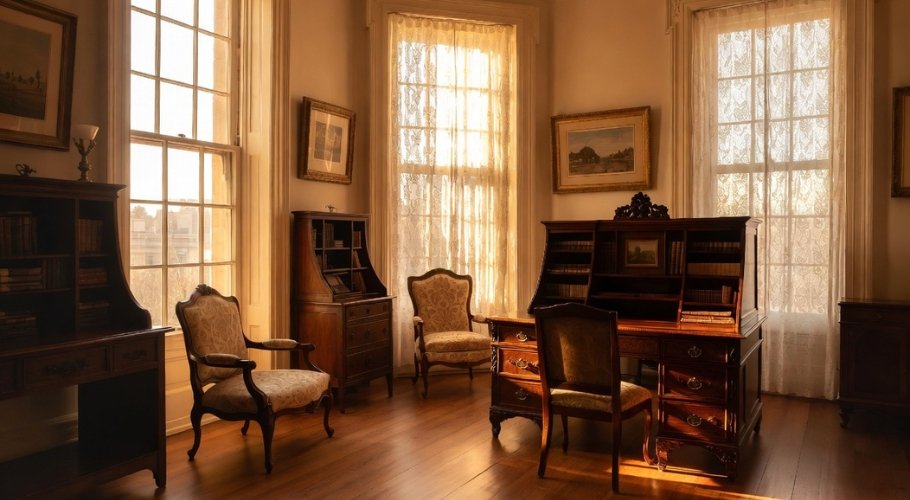
There’s a particular kind of light that floods through the tall original windows of a Princeton Victorian on a July afternoon. It’s the kind of light that makes a room feel alive — warm, generous, the sort of light that painters would have described as golden. It’s also the kind of light that, over months and years, quietly destroys everything it touches.
The hardwood floors. The Persian rugs. The silk upholstery. The oil paintings. The century-old architectural millwork painted in colors that took your decorator three samples to match. All of it degrading, fading, and losing the depth that makes Princeton’s historic interiors worth protecting in the first place.
If you own a historic home in Princeton — anywhere from the National Register-listed properties along Nassau Street to the Tudor and Victorian stock in the Western Section — this isn’t a hypothetical scenario. It’s a slow-motion reality that’s been underway since the first warm day of spring.
The good news is there’s a solution so transparent you’d never know it was there.
Princeton’s Historic Housing Stock: Beautiful, Irreplaceable, and Vulnerable
Princeton’s Historic District encompasses 370 acres and was listed on the National Register of Historic Places in 1975, containing seven of Princeton’s nine National Historic Landmarks — the largest concentration of such sites in the state. Beyond the formal district, much of Princeton retains a historic character, with Tudor homes, Victorians, and mid-century styles making up much of the town’s residential identity, alongside a median home price of around $850,000.
These aren’t interchangeable properties. The original plank floors in a pre-Civil War Princeton home can’t be replicated by a flooring contractor. The hand-mixed paint colors, the antique furniture, the inherited textiles — these are often the very features that define the character of the home and anchor its market value. Protecting them isn’t a decorating concern. It’s a preservation priority.
And it’s a priority that Princeton homeowners have historically struggled to address without compromising the look of their windows — which, in a historic district, can trigger a whole separate layer of scrutiny from Princeton’s Office of Historic Preservation, which reviews proposed changes in locally designated historic districts to ensure alterations and new construction are compatible with their surroundings.
That constraint changes the entire calculus around window treatments. Heavy curtains block light. Tinted films alter the appearance of glass. Exterior solar shades modify the building’s facade. All of these are visible interventions — some of which require historic preservation review, and none of which preserves the original character of the window.
Invisible UV window film is the rare solution that addresses the problem without creating a new one.
What Princeton’s Sun Is Actually Doing to Your Interiors
Before understanding why UV film works, it’s worth understanding precisely what you’re fighting. Solar radiation reaching your Princeton windows carries energy across three spectrums, and each causes damage differently.
Ultraviolet radiation operates in the 300–380 nanometer range — completely invisible to the human eye, but extraordinarily destructive to organic and synthetic materials alike. It breaks down dye molecules in fabrics, degrades the lignin in wood, and accelerates the oxidation of paint pigments. UV radiation is responsible for approximately 40% of all interior fading, making it the single largest cause of color and material loss in sun-exposed rooms.
Visible light — the spectrum you can actually see — contributes roughly 25% of fading damage. High-energy wavelengths on the blue end of the visible spectrum are particularly aggressive, causing photodegradation in fabrics and artwork even at normal interior light levels.
Infrared heat accounts for another 25% of fading, not through direct photochemical action but by accelerating the rate of chemical reactions. A surface that’s warm fades faster than a cool surface, even under identical light conditions. This is why rooms that run hot near sun-drenched windows show accelerated material degradation compared to rooms where heat gain is controlled.
The remaining 10% of fading is attributed to miscellaneous factors including humidity, pollutants, and artificial lighting. But UV, visible light, and heat together represent 90% of what’s destroying Princeton interiors — and UV alone is the largest single driver of that damage.
Now add Princeton’s specific sun exposure profile. New Jersey’s UV Index peaks at 10 in July and August — classified as “very high risk of harm from unprotected sun exposure” — and remains at elevated levels from April through September. Princeton’s inland position in Mercer County means it receives sun exposure without the coastal moderation that reduces UV intensity along the Shore. The town’s characteristic large, historically authentic windows — many of them single-pane or early double-pane glass — provide minimal UV filtration on their own.
Standard single-pane glass, by itself, filters perhaps 25% of incoming UV radiation. Double-pane glass does slightly better — perhaps 40%. Neither is close to adequate for protecting the kinds of irreplaceable interior contents that Princeton historic homes typically contain.
What Invisible UV Film Actually Does
High-performance UV window film operates through a specialized optical filtering mechanism that targets the ultraviolet spectrum while leaving visible light transmission essentially unchanged. Applied as an ultra-thin, optically clear layer directly to existing glass, quality UV films block 99% of UV radiation across the 300–380nm range — the precise wavelengths that drive the vast majority of interior fading.
The word “invisible” is not marketing shorthand. These films are engineered for transparency. Their visible light transmission remains extremely high — typically 90% or above for clear UV films — meaning a room that received a certain quality of natural light before installation receives essentially the same quality of light after. The human eye cannot detect the difference. Neither can a camera. And critically for Princeton historic homeowners navigating preservation review, neither can a building inspector comparing your windows to the original character of the structure.
This is the fundamental advantage of UV film over every other fading protection option. Curtains protect only when closed. Exterior awnings modify the building’s appearance. Tinted glass films are visible from the street. UV film is, by design, genuinely invisible — it doesn’t change what your windows look like from the inside or the outside, it doesn’t alter the quality of the light entering your rooms, and it doesn’t require any modification to the glass or the frame.
It simply removes the most destructive element from the light reaching your interior.
The Real-World Impact on Princeton Interiors
For a Victorian home on Library Place or a Federal-style property near Princeton Battlefield, the practical implications of 99% UV filtration are significant.
Hardwood floors: Original wood floors in Princeton homes are often the most difficult and expensive element to restore or replace. UV radiation breaks down the lignin matrix in wood and fades both natural wood tones and applied stains. With UV film installed, the photodegradation rate drops dramatically. Floors that would have shown visible fading in two to three years of significant sun exposure maintain their color and finish for dramatically longer periods.
Textiles and upholstery: Woven fabrics — whether antique rugs, silk drapery, upholstered furniture, or tapestries — are among the most UV-sensitive materials in a home. The dye molecules in both natural and synthetic fabrics absorb UV energy and break down. A 99% reduction in UV transmission removes the primary mechanism of this damage, significantly extending the useful life and visual richness of these materials.
Artwork: Princeton homes frequently contain original paintings, prints, watercolors, and photographs — many of them irreplaceable family pieces or works of genuine art market value. Museums worldwide use UV-filtering glass specifically to protect works on display from photodegradation. Clear UV film brings equivalent protection to residential glass at a fraction of the cost of museum-grade framing for every significant piece in the collection.
Architectural finishes: Original painted millwork, hand-applied plaster finishes, and historic paint colors are among the most distinctive features of Princeton’s older homes. UV radiation fades paint pigments, particularly on south- and west-facing walls and window surrounds where reflected light concentrates. UV film installed on the windows nearest these surfaces reduces the fading rate on the finishes themselves.
When UV Film Alone Is Sufficient — and When to Consider More
UV film is the right solution for Princeton homeowners whose primary concern is fading protection and interior preservation without any visible change to their windows. It’s particularly well-suited to properties in historic districts where maintaining the original appearance of the glass is essential — and where the Office of Historic Preservation may review any modifications to a home’s exterior character.
However, it’s worth understanding what UV film does not provide. Because it’s optically clear and doesn’t significantly reduce visible light or infrared heat transmission, it addresses the 40% of fading caused by UV radiation without substantially reducing the 25% caused by visible light or the 25% caused by heat.
For rooms with intense afternoon sun exposure — a west-facing study, a south-facing sitting room with large original windows — homeowners who want comprehensive fading protection, along with heat reduction and glare control, may benefit from a spectrally selective window film. These films remain quite light in appearance — they are not dark tints — but they filter a broader portion of the solar spectrum, addressing UV, a portion of visible light, and some infrared heat simultaneously. Total fading protection with these films can reach 75% or more compared to untreated glass.
The right specification depends on the specific room, window orientation, the sensitivity of the interior contents, and how the home fits within Princeton’s historic preservation framework. A room containing particularly valuable or irreplaceable items may warrant a more comprehensive approach. A room where the primary asset to protect is original flooring, and where the homeowner values the existing light quality absolutely, may be perfectly served by clear UV film alone.
Practical Considerations for Princeton Homeowners
A few points worth knowing before moving forward:
Historic district review: If your property sits within Princeton’s locally designated historic districts, exterior modifications typically require review by the Historic Preservation Commission. UV window film applied to the interior surface of existing glass generally does not constitute an exterior modification — it’s invisible from the street and doesn’t alter the glass, the frame, or the building’s appearance in any observable way. That said, it’s always advisable to confirm with the Office of Historic Preservation for your specific property and situation before any installation.
Compatibility with older glass: Princeton’s historic homes often feature original single-pane glass, wavy glass, or early insulated glass units that may be decades old. UV film can be applied to all of these surfaces, though the approach and adhesive specifications may vary slightly. A qualified installer will assess the glass before specifying the film.
Longevity: Quality UV window film, professionally installed, carries service lives of ten years or longer with minimal maintenance requirements. The investment in film protection should be understood as a multi-decade strategy — one that compounds in value as the irreplaceable interior elements it protects continue to appreciate.
Installation impact: Application is non-invasive. No glass removal, no structural changes, no construction. A professional installation on the windows of a typical Princeton room typically takes a matter of hours, with no disruption to the room’s use afterward beyond a brief curing period.
To understand what specification makes the most sense for your specific home, windows, and interior contents in Princeton, consider speaking with a local window film specialist who understands both the science of UV protection and the particular preservation considerations of Princeton’s historic housing market. The combination of technical knowledge and local context makes a meaningful difference in getting the right result.
Conclusion
Princeton is home to some of the most architecturally and historically significant residential properties in New Jersey — properties that represent generational investments and irreplaceable pieces of the town’s 300-year-old story. The sunlight that makes those homes luminous and beautiful in July is also the force that degrades their most valuable features, season by season, without any visible warning until the damage is already done.
Invisible UV film doesn’t change the way your home looks. It doesn’t alter your windows, modify your light, or require any review from a preservation board. It simply removes the most destructive element from every beam of sunlight reaching your floors, your furniture, your artwork, and your finishes.
For Princeton’s historic homes, that quiet, invisible protection may be the most consequential preservation decision a homeowner can make.