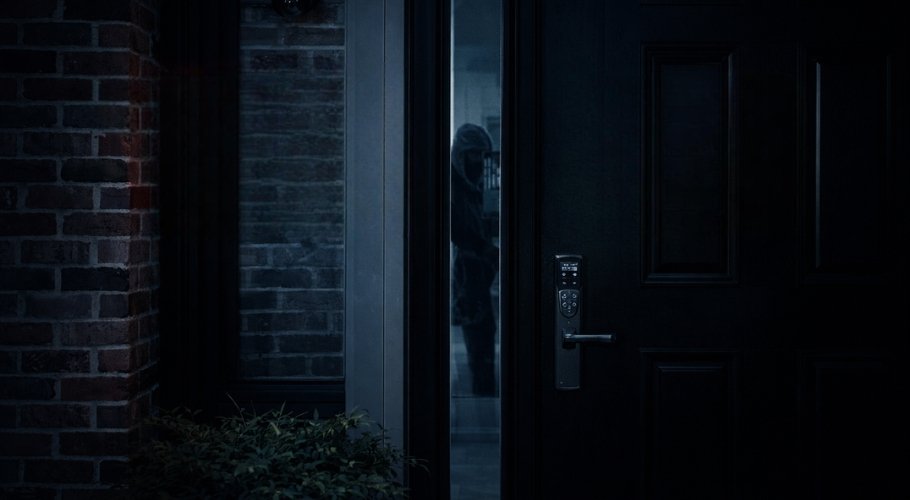
The glass vulnerability trenton property owners are only now discovering
For years, Trenton homeowners and landlords focused security upgrades everywhere except the most obvious entry point. That conversation is finally changing.
Ask most Trenton property owners what security upgrades they’ve made in the last five years and you’ll hear a consistent list. Smart locks. Reinforced door frames. Security cameras. Motion-activated lighting. Alarm systems with monitoring subscriptions. These are reasonable, well-marketed investments — and the home security industry has done an effective job of making sure property owners know they exist.
What almost never appears on that list is glass.
And yet glass — specifically the unprotected window panes and glass door panels on the ground floor of a Trenton property — is statistically the most commonly exploited entry point in residential and commercial break-ins. A standard residential window pane can be breached silently in under ten seconds. No deadbolt is involved. No alarm sensor triggers before entry is complete. The reinforced door frame means nothing when the window beside it is standard single-pane glass that surrenders to a single sharp impact.
This is the glass vulnerability that Trenton property owners are only now beginning to address directly — and the reasons it’s taken this long to enter the mainstream conversation are worth understanding.
Why Glass Has Been Overlooked in Trenton’s Security Conversation
Trenton is the capital of New Jersey and a city with a documented and persistent property crime challenge. Residential burglary, retail theft, and commercial break-ins have affected multiple Trenton neighborhoods — from the North Ward to South Trenton — at rates that consistently exceed both New Jersey state averages and national benchmarks. Property owners in Trenton are not naive about security risk. They’ve made investments.
The gap is not awareness of risk — it’s awareness of the glass solution. Security window film has historically been marketed almost exclusively to large commercial and government facilities. The residential and small commercial market — which describes the majority of Trenton’s housing stock and neighborhood business corridor — has received almost no targeted education about what security film is, how it performs, and what it costs.
The result is a city full of property owners who have secured their doors thoroughly while leaving their windows — the faster, quieter, less-resistant entry point — essentially unaddressed. Neighboring communities like Hamilton Township, Ewing, and Lawrence Township are in a similar position, though Trenton’s specific crime profile makes the gap more consequential within city limits.
That is beginning to change. As awareness of security film reaches the residential market through contractor recommendations, insurance conversations, and word-of-mouth among landlords and property managers, Trenton property owners are encountering a solution that most of them had never been offered before.
The Physics of Glass Vulnerability
Understanding why glass is such an exploited entry point requires understanding how standard glass actually behaves under impact — and how security film changes that behavior.
Standard residential glass — whether single-pane or conventional double-pane — shatters on sharp impact and clears the frame rapidly. The fragments fall inward and outward, and the frame opening becomes accessible almost immediately. The total elapsed time from first strike to usable entry point: typically five to fifteen seconds for an experienced forced-entry attempt. This speed is the core of glass’s vulnerability. It completes before most alarm systems detect and communicate the breach, and certainly before any response is possible.
Security window film changes this sequence fundamentally. The film is a high-tensile-strength polyester laminate bonded to the interior glass surface. When glass receives an impact sufficient to shatter it, the film holds the broken fragments in a cohesive sheet within the frame. The glass has fractured — but it has not cleared the opening. Instead, it presents a cracked, fragmented barrier that continues to occupy the frame and resist passage.
What this creates is resistance time. The entry attempt that previously completed in ten seconds now requires sustained, repeated blows to progressively break down the film’s holding strength. Depending on film thickness and installation method, this resistance period extends to 60 seconds, 90 seconds, or beyond. And that time extension is, in the context of residential burglary, transformative.
Research on residential burglary behavior consistently finds that the majority of break-in attempts are opportunistic rather than committed — perpetrators are seeking fast, low-risk entry and will abandon attempts that attract attention, consume time, or require sustained visible effort. The extended resistance that security film creates converts a ten-second silent entry into a prolonged, noisy, visible forced-entry attempt. The behavioral response to that changed dynamic is, in most cases, abandonment.
Film Thickness and What It Means for Trenton Properties
Security film is available in multiple thickness levels, and the appropriate specification depends on the risk profile of the specific entry point being protected.
4 mil security film is the entry threshold for glass security applications. It provides basic glass retention after impact — holding fragments in place after the first strike — and blocks 99% or more of UV radiation as a structural property of the polyester laminate. For lower-risk secondary windows in Trenton properties — upper-floor windows, windows in less-accessible locations, windows that are not adjacent to door hardware — 4 mil provides meaningful baseline protection at the lowest cost point. It will not withstand sustained forced-entry attempts but addresses the fastest, most opportunistic breach scenarios.
8 mil security film is the specification most commonly appropriate for primary entry-point glass in Trenton residential and commercial properties. Ground-floor windows, sidelights adjacent to front and rear door locks, sliding glass patio doors, and glass panels within reach of interior door handles all warrant 8 mil specification. This thickness provides substantially greater resistance to sustained impact — typically requiring multiple determined blows over an extended period before the film’s holding strength is overcome. For the majority of Trenton ground-floor applications, 8 mil represents the optimal balance of protection level, glass compatibility, and installation cost.
12 mil security film approaches commercial-grade performance in a residential-applicable product. It is the appropriate specification for the highest-risk entry points in Trenton properties — large sliding glass doors at ground level, floor-to-ceiling windows in street-facing rooms, and any glass opening that, if breached, provides direct access to high-value areas of the property. At 12 mil thickness, the film creates a barrier that can withstand sustained blunt-force assault and meaningfully delays even tool-assisted entry attempts. For Trenton landlords managing properties in higher-risk neighborhoods, 12 mil on primary entry-point glass represents the most complete residential security film option available.
Anchored installation systems extend the protection beyond what film thickness alone provides. In standard film installation, the film holds glass fragments together but the glass-and-film unit can still be pushed inward from the frame under sufficient force. Anchored systems apply a structural silicone sealant bonding the film to the window frame itself — requiring the frame assembly to be defeated in addition to the glass. For Trenton properties where the highest available protection level is the objective, anchored 8 mil or 12 mil installation represents the current residential security film standard.
Trenton’s Property Types and How Security Film Applies
Trenton’s housing and commercial stock is diverse — and security film applications differ meaningfully across property types.
Older single-family homes in established Trenton neighborhoods — the Burg, Chambersburg, the West Ward — frequently feature original or period-replacement single-pane windows. These are the most common and most vulnerable glass profile in Trenton residential stock. Security film performs on single-pane glass without the thermal stress compatibility concerns that apply to double-pane units. For these properties, film installation is straightforward and the protection benefit is immediate. The combination of 8 mil security film on ground-floor windows and 4 mil on secondary upper-floor glass covers the most common threat profile efficiently.
Multi-unit residential properties and rentals represent a significant portion of Trenton’s housing stock. For landlords managing two-family, three-family, or larger residential buildings, security film is a particularly cost-effective protection layer because it requires no ongoing maintenance cost, no subscription fee, and no tenant behavior change to function. It is installed once and performs continuously for the life of the film — typically 10 to 15 years under manufacturer warranty. For Trenton landlords who have experienced glass break-ins or have properties in higher-risk locations, it eliminates the repeated replacement and repair cost associated with standard glass breach events.
Ground-floor commercial properties on Trenton’s neighborhood business corridors — including the Broad Street and South Broad corridor, the Clinton Avenue commercial strip, and neighborhood retail throughout the city — deal with a specific vulnerability profile. Large storefront glass panels, often single-pane plate glass in older commercial buildings, represent both a high-value entry point for smash-and-grab theft and a significant glass replacement cost when breached. Security film at 8 mil or 12 mil on these storefronts addresses both the entry resistance and the glass retention aspect — holding glass in place after impact rather than producing the scattered breakage that multiplies replacement costs.
Properties undergoing renovation or repositioning in Trenton’s emerging development corridors — the Mill Hill neighborhood, the areas around the new transit improvements, and the Roebling development zone — represent a growing security film opportunity. Properties that are temporarily vacant or transitioning between uses are particularly vulnerable to opportunistic forced entry during the period before full occupancy. Security film installation during renovation provides immediate glass protection for the interim period and carries forward as a permanent asset improvement.
The Secondary Benefit That Often Surprises Trenton Property Owners
Security window film — regardless of thickness specification — blocks 99% or more of ultraviolet radiation as a structural characteristic of the polyester laminate material. This UV blocking is not a marketing add-on. It is a physical property of the film that functions independently of its security performance.
For Trenton residential properties, this means that security film simultaneously addresses the UV damage that has been quietly degrading floors, furniture, and interior finishes throughout the home. Original hardwood floors near south-facing windows, upholstery that has begun to fade unevenly, window treatments that have lost their color near the glass — all of these are consequences of sustained UV exposure that security film stops entirely.
For Trenton commercial properties, the UV blocking protects displayed merchandise, signage, and interior surfaces from the degradation that drives ongoing replacement costs. A Trenton retailer who installs security film for break-in protection and discovers that their display merchandise no longer fades has received a meaningful secondary return on the investment.
Some security film specifications also incorporate solar control properties — meaningful heat rejection layered into the film structure. For south- or west-facing Trenton windows that receive heavy afternoon sun exposure, a security-plus-solar specification addresses the thermal load and the security vulnerability in a single product and a single installation event.
What Trenton Property Owners Should Do With This Information
The practical starting point is a perimeter assessment. Walk the ground floor of your Trenton property and identify every glass opening — windows, sidelights, door glass panels, sliding doors, and any glass within arm’s reach of a door lock or latch. These are your vulnerability points. Rank them by access ease and proximity to high-value areas or door hardware.
Ground-floor windows adjacent to door locks are the highest priority. These are the entry points where a glass breach translates most directly into complete interior access — the glass breaks, a hand reaches through, and the door opens from inside. These points warrant 8 mil or anchored installation as a minimum specification.
Secondary ground-floor windows that are not adjacent to door hardware are the next priority — still significant but representing a slightly slower and more visible forced-entry path. Eight mil or 4 mil specification depending on assessed risk level.
Upper-floor windows and glass that is not directly accessible from ground level without equipment are a lower priority but still benefit from baseline 4 mil protection, particularly for the UV blocking and the baseline glass retention it provides.
To determine the specific security film specification that genuinely addresses your Trenton property’s vulnerability profile — whether it’s a single-family home in Chambersburg, a multi-unit rental in the West Ward, or a commercial storefront on South Broad Street — speaking with a security window film specialist who understands Trenton’s property landscape is the most direct path to a well-matched and effective installation.
The Conversation That’s Been Missing
Trenton property owners have invested thoughtfully in security for years. The door hardware is solid. The cameras are running. The monitoring service is active. What has been missing from the conversation is the glass — the entry point that requires none of those systems to defeat and that remains unaddressed on the vast majority of Trenton properties even today.
Security window film doesn’t replace any of those other investments. It completes them — closing the gap that every other security layer leaves open. In a city where property crime is a daily reality for many neighborhoods, that completion is not a minor upgrade. It is the difference between a security system that addresses most entry scenarios and one that addresses the fastest and most commonly exploited one.
That conversation is now underway in Trenton. For property owners who engage with it now rather than after an incident, the timing is simply better.