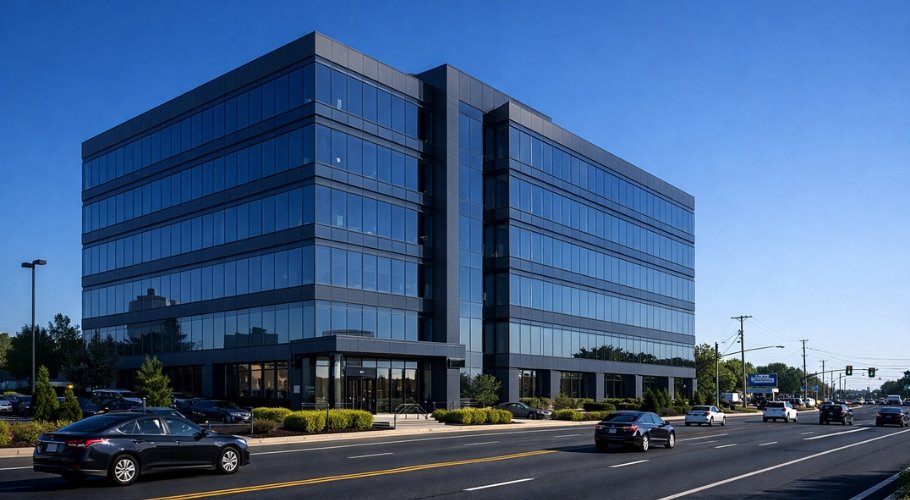
Why cherry hill NJ commercial properties are prioritizing window film in 2026
Something has shifted in how Cherry Hill business owners think about their buildings. It’s not dramatic — there’s no single announcement or incentive program driving it. It’s the quieter kind of shift that happens when enough people in a commercial community reach the same conclusion independently: that the glass in their building is working against them, and that there’s a straightforward, cost-effective way to change that.
Window film installations across Cherry Hill’s commercial corridors — Route 70, Haddonfield Road, Marlton Pike, and the Brace Road business district — have increased noticeably heading into 2026. Retail operators, medical practices, professional offices, and restaurant groups are making this upgrade with a clarity of purpose that wasn’t as common five years ago. The question worth asking is why now, and why Cherry Hill specifically.
The 2026 Business Environment Is Making Glass Performance a Financial Priority
Three converging factors have made commercial window film a more urgent conversation in 2026 than it was even two or three years ago.
Energy costs in New Jersey have continued to climb. Commercial electricity rates in New Jersey have risen consistently over the past several years, and Camden County businesses — including the full range of Cherry Hill’s commercial stock — are operating under utility costs that make energy efficiency a front-of-mind concern rather than a background consideration. When solar heat gain through commercial glass accounts for 25% to 40% of a building’s cooling load during South Jersey’s five-month cooling season, the financial case for solar control film is straightforward arithmetic rather than an aspirational green initiative.
Tenant and customer expectations around indoor comfort have risen. Post-2020, the commercial real estate and retail environment has adapted to a workforce and customer base that has experienced quality home working environments and is less tolerant of uncomfortable commercial spaces. A Cherry Hill office where employees avoid west-facing workstations in the afternoon, or a retail environment where customers cut their visits short because the space is too warm or too glare-heavy near window displays, is operating with a friction cost that compounds daily across the year.
Return-on-investment expectations have compressed. Cherry Hill business operators in 2026 are evaluating capital improvements with tighter ROI timelines than previous cycles. Window film — with a typical commercial payback period of two to five years in energy savings alone, plus additional returns from merchandise protection, reduced HVAC wear, and improved occupant experience — clears the bar that many more significant capital investments currently don’t.
Cherry Hill’s Commercial Climate Makes This Conversation Necessary
Camden County experiences a full mid-Atlantic climate that creates genuine year-round glass performance challenges for commercial properties.
Summer is the most acute period. Cherry Hill’s July average highs reach 87°F to 89°F with heat index values regularly pushing past 95°F during peak afternoon hours. UV index readings between June and August consistently reach 7 to 10 — EPA classifications of high to very high — and this solar intensity hits commercial glass for the full business day. Standard commercial plate glass transmits up to 87% of solar infrared radiation. For a Cherry Hill retail space or office with south- or west-facing glass panels — which describes the majority of Route 70 and Marlton Pike storefronts — the HVAC system is absorbing that load from the moment the building opens until late afternoon, five days a week, for five months of the year.
The financial cost of this is not theoretical. A 2024 Lawrence Berkeley National Laboratory study on commercial building energy performance found that solar control window films applied to existing glass reduce cooling energy consumption by 10% to 30% in high-solar-load commercial environments. For a mid-sized Cherry Hill commercial space with monthly utility costs of $2,500 to $5,000 during peak summer, that reduction represents $250 to $1,500 per month in recoverable cooling costs — sustained across the film’s commercial warranty lifespan of 10 to 15 years.
Winter adds a second dimension. Cherry Hill’s January average lows reach the mid-20s°F. Commercial spaces with large glass facades lose meaningful heat through the glass during the heating season. Low-emissivity film addresses this by reflecting interior heat back into the space, providing year-round energy performance rather than a one-season upgrade — a distinction that matters to Cherry Hill business operators evaluating the full annual return.
The Three Commercial Priorities Driving Adoption in Cherry Hill in 2026
Priority one: Energy cost reduction. This is the primary driver for the majority of Cherry Hill commercial window film installations in 2026. The calculation is consistent: solar control film reduces cooling load, lowers energy consumption, and generates measurable utility savings from the first full billing cycle after installation. For Cherry Hill businesses on Route 70 and the Marlton Pike corridor — where retail and office spaces frequently have large south- or west-facing glass facades — the solar load reduction from quality film with a TSER rating of 60% to 80% translates directly into reduced HVAC runtime and lower monthly utility costs.
Priority two: Asset and merchandise protection. Cherry Hill’s retail sector — which includes significant concentrations of fashion, home goods, electronics, and specialty retail — operates with merchandise whose value degrades under UV exposure. Ultraviolet radiation causes approximately 40% of interior fading and material degradation in commercial settings. A retail operator displaying color-sensitive inventory near south-facing windows without UV protection is running a continuous inventory depreciation program. Premium commercial films block 99% or more of UV radiation regardless of visible light transmission level — meaning UV protection is available even with films that maintain a near-clear appearance essential for retail storefronts.
Priority three: Occupant experience and productivity. The Cherry Hill commercial market in 2026 includes a growing concentration of professional services, medical practices, technology companies, and hybrid-work office environments — all of which operate with a workforce that is both more mobile and more selective about workspace quality than a decade ago. Glare-related productivity loss is measurable: research on commercial work environments consistently links high-contrast glare to reduced task performance and increased error rates. High-performance glare-control films reduce visible glare by 60% to 85% while maintaining the natural light quality that makes commercial spaces feel welcoming and functional.
The Film Types Cherry Hill Commercial Properties Are Installing
The Cherry Hill commercial market is not homogeneous, and the film specifications driving adoption in 2026 reflect the diversity of the town’s commercial stock.
Nano-ceramic solar control film has become the specification of choice for Cherry Hill’s professional office and medical practice market. Its combination of high TSER performance — typically 65% to 80% — with neutral, virtually invisible exterior appearance and zero signal interference makes it the standard for office environments where both solar performance and professional aesthetics matter. It is compatible with the double-pane and Low-E glass configurations common in Cherry Hill’s commercial construction from the 1990s onward, provided compatibility is verified before installation.
Spectrally selective films with high visible light transmission are the preferred option for Cherry Hill retail storefronts where visual merchandise presentation is a business requirement. These films achieve strong heat rejection and near-total UV blocking while allowing maximum visible light through — preserving the bright, inviting appearance that draws retail customers while eliminating the solar damage working on inventory and the thermal discomfort affecting customer dwell time.
Security film with integrated solar control is gaining traction among Cherry Hill ground-floor retail operators, particularly those in higher-traffic commercial corridors. Anti-smash-and-grab film at 8 mil thickness addresses the physical vulnerability of commercial glass to forced entry while providing meaningful UV and solar control in a single product. For Cherry Hill businesses where glass security and energy performance are simultaneous concerns, this combined specification delivers on both without requiring separate installations.
Perforated and one-way vision film continues to see adoption among Cherry Hill retailers and hospitality businesses that want to leverage storefront glass as advertising real estate without compromising interior sightlines or increasing interior heat gain. Custom-printed perforated film converts window square footage into brand communication while the perforation structure maintains interior visibility and allows natural light transmission.
Switchable smart glass film is entering the Cherry Hill commercial market through medical practices, financial services offices, and the conference room glass of professional services businesses. The ability to convert glass partitions from transparent to frosted on demand — through a wall switch or app-controlled system — addresses the confidentiality requirements of healthcare and professional service environments while maintaining the open, connected aesthetic that modern commercial design favors in its default state.
What Cherry Hill Commercial Property Owners Should Verify Before Committing
Glass type and film compatibility must be confirmed before any commercial installation. Cherry Hill’s commercial stock ranges from older single-pane storefronts on Haddonfield Road to modern double-pane office buildings on Route 70. The film specification appropriate for single-pane glass differs from what is safe and effective on sealed insulated double-pane units, and Low-E coated glass requires specific film selection to avoid thermal stress issues. Any professional commercial assessment should include glass type documentation.
The installation timeline for commercial properties requires planning. Unlike residential installations that can typically be completed in a single day, commercial installations on multi-window or multi-floor properties require scheduling to minimize business disruption. Most professional installers can work outside business hours for retail environments where customer presence during installation is not practical.
Phased installation by solar exposure is a legitimate commercial strategy for Cherry Hill businesses with budget constraints. South- and west-facing glass receives the highest solar load in Cherry Hill’s climate and delivers the greatest return from film investment. Prioritizing these elevations first, with additional glass following in subsequent phases, allows the energy savings from the highest-priority installations to partially fund the next phase.
To understand which specific film specification delivers the best financial and operational return for your Cherry Hill commercial property — whether it’s a Route 70 retail space, a Haddonfield Road medical practice, or a professional office suite — speaking with a commercial window film specialist who understands Camden County’s business environment is the most direct path to a well-matched solution.
The Broader Trend
Cherry Hill’s commercial adoption of window film in 2026 is not a passing trend driven by a single factor. It is a convergence of sustained energy cost pressure, rising occupant expectations, and a growing commercial community awareness of what modern window film actually delivers — which is meaningfully different from what most business owners imagined five years ago.
The businesses acting on this now are gaining a compound advantage: lower operating costs, better-protected assets, more comfortable and productive environments, and a glass performance baseline that continues performing for the next 10 to 15 years. For Cherry Hill’s competitive commercial market, that combination of benefits from a single, non-disruptive installation is a straightforward business decision.